Atome in Reims launches the slow champagne era
“Tradition changes every day, and the contemporary isn’t less authentic than the ancient.” These are the words of Allen S. Weiss in his book A guide anachronique de Kyoto, in which he describes the Japanese culture by comparing its rituals, art and everyday life to those of the Western world. It made me think of Au Bon Manger, the wine shop slash deli in Reims that for years has been the epicentre of terroir champagne and my favourite place in the world. Owners Aline and Eric sensed the atmosphere changing and decided not to resist it, but reinvent themselves entirely: they closed their doors. At first, I thought a sacred place had disappeared forever, only to realise that with their new concept Atome, something incredibly interesting has begun. We’ve entered a new era: Slow Champagne.
The deli that went missing
For years and years, I visited Au Bon Manger in Reims. The wine shop/deli was introduced to me by my late partner Peter, who came so far in life that at one point, he had his nameplate placed on one of the chairs in his honour. Owners Aline and Eric sold the best champagne available, gave us tips on which new producers to try, and served the best smoked salmon and cheese in an atmosphere that money cannot buy. Once arrived at Au Bon Manger, you could shake off your regrets about the past and your worries about tomorrow, leave them in a bag at the doorstep and go inside soul-first. There were times we stayed there for hours simply being happy to be alive: softly clinking Zalto glasses, drinking gold, talking long after the bottles were empty.
But over time, things changed. Tourists would come in, being told about this magical place, only to start a rant on the prices of the champagne-per-glass. Wine lovers wanting to be part of the myth spoke loudly of brioche notes while ordering bottles without really tasting what was right in front of them. People went inside, but didn’t see Au Bon Manger for what it truly was: a simple place, where it didn’t matter who you were or what you knew about wine. The only thing that mattered was truly wanting to be there.
Aline and Eric felt the passion slipping away from the place they loved so deeply and thought long and hard about their future. After Covid had hit them hard, making them move away from being a deli and focus more on champagne sales, they made a bold decision: they closed the doors of Au Bon Manger and replaced it with the more exclusive wine club and restaurant Atome. They erased the name from the storefront, removed the canopy and stripped off the iconic blue paint. From the outside, nothing reminded people of the deli/wine shop that once was. In fact, the first time I went back, even I walked straight past it.
The birth of slow champagne
The second time I came back after the Big Change was about two weeks ago. I didn’t come alone: I brought Peter’s Norwegian side of the family and my Dutch sister-in-law Anouk, to show them the world Peter had loved so much. Needless to say that Atome was our first and most meaningful stop. The reunion with Aline and Eric was as intense as it was warm, and they welcomed Peter’s family with open arms. Eric, once a DJ at Radio France, had dusted off his old passion and turned on a more than impressive stereo installation, with the simple words: “While you’re here, I’m going to play you some songs.” As we sat down, I looked across the table, and I could instantly see the magic of this place had gotten under everyone’s skin. The deli had made room for speakers, the sounds of tourists chatting had made room for soft jazz and family stories. Everything had changed, and yet everything was exactly how it should be.
“The new generation seems in a rush, and as a result, we see more and more champagne being sold that isn’t ready to leave the cellars”
In between the smoked salmon and the main course, I had a heart-to-heart conversation with Aline on the state of terroir champagne. As it turned out, the people visiting Champagne weren’t the only ones that had changed. So had the producers themselves. “It’s not what it was before,” Aline said. “I see fewer champagne makers that really take the time to make good champagne. The new generation seems in a rush, and as a result, we see more and more champagne being sold that isn’t ready to leave the cellars. There was a time when rising stars seemed everywhere. Now they’re more scarce.” I realised it was true. It had been a while since I discovered something new. My latest discovery dated from last year, where I fell for the charms of Salima and Alain Cordeuil and their amazing 2014 Libre. But that was just me being late to the party; they had been making champagne for ages. Who in these last few years had risen to the occasion and started doing things differently, patiently?
“We need more patience,” Aline nodded. “It’s why I’m no longer speaking of terroir champagne. I want to speak of slow champagne.” She pointed at her Collection Aline, her champagne line made from collaborations between her and her favourite champagne makers. The labels read Vincent Charlot, Leclerc Briant, Olivier Horiot and Bourgeois-Diaz: all being brilliant and, yes, patient, champagne makers. As soon as the words had come out of Aline’s mouth I realised how true they were. Slow champagne. Not just terroir champagne, which aims to bring out the flavours of the soil, climate and location in the region, but champagne that’s made with patience, dedication and vision. Not to make it loud, shiny and sellable, but to make it real.
While talking to Aline, I realised slow champagne wasn’t about champagne alone. She and Eric themselves embodied the concept, too. They managed to keep a place alive while changing everything except who they were, which meant that the heart of both Au Bon Manger and Atome was in its people, not in its setup. They could’ve chosen the easy way and made money on tourists wanting to drink champagne, any champagne. Instead, they chose authenticity, carefully selecting not only the producers they want to work with, but also the people they want to serve.
Memories in the making
It brought me back to the book A guide anachronique de Kyoto, in which Allen S. Weiss describes the same phenomenon in Japanese art. Where in the Western world, more and more museums turned into well-managed hotspots where flow-through is optimised by signs, arrows and the absence of benches, art in Japan is often admired as if the visitor was invited into someone’s home. A lot of time and effort are put into light and shadow, cohesion, and meaning. Does the room deepen the meaning of the object? Does the object deepen the meaning of the room? Do the surroundings and atmosphere match the piece of art? Do they tell a story together? And equally important: have the objects been selected based on the visitor, his or her story? Will the visitor feel at ease, will he feel welcome?
I imagine Aline and Eric ask themselves the same questions, over and over. Which is why everything they do feels deeply human and creates memories. I could see it happening right then and there with the family I inherited: while sipping champagne, eating out-of-this-world salmon and listening to music together, we were a memory in the making.
Life after Au Bon Manger
On the train back home, I kept thinking about Aline’s words: slow champagne. Not just champagne that reflects a place, but champagne made with enough patience to become part of someone’s life. Maybe the same applies to travel, hospitality, art, even friendship. They all come down to the simple principle that the best things are rarely rushed.
Also, good things evolve. Au Bon Manger disappeared, yet somehow its spirit survived the transformation completely intact. Atome isn’t trying to recreate the past. It’s protecting what mattered in the first place: time, attention, people gathered around a table. That afternoon in Reims, while jazz played through Eric’s speakers and Peter’s family raised their glasses together, I realised I wasn’t mourning a place that had vanished. Slowly, before our eyes, a new tradition was being born, and we were part of it.
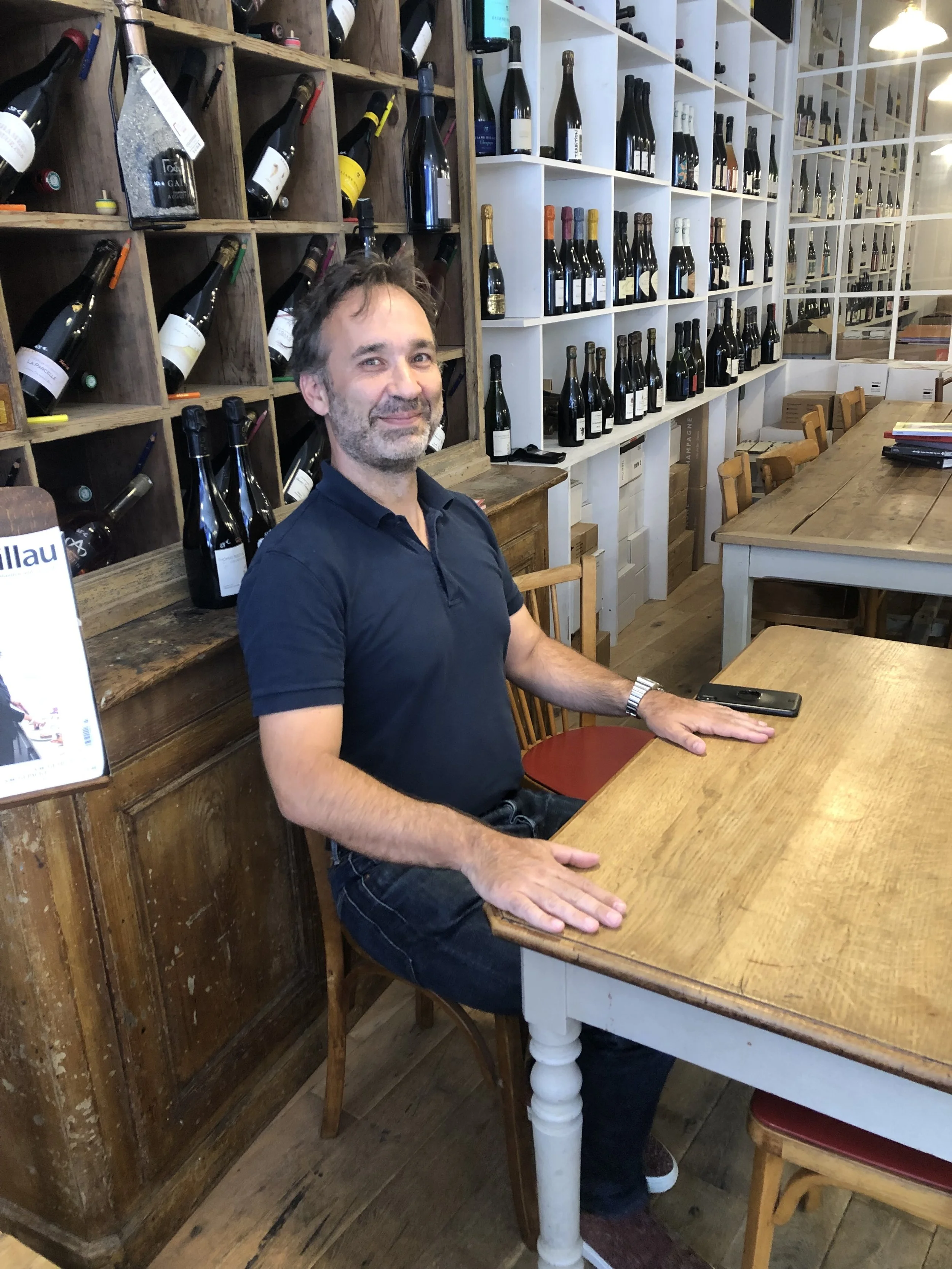
Peter Tangstrøm and his chair, September 2021